Streamlined OpenFOAM Post-Processing with Parallel Parquet Conversion and Automated Analysis
Project Details
OpenFOAM simulations, while powerful, often generate a challenging data landscape. Traditionally, each physical parameter (e.g., velocity, pressure, turbulent viscosity) is stored in a separate file within individual time-step directories. For simulations with numerous time steps, this leads to a proliferation of files, creating significant I/O bottlenecks and hindering efficient data management. While ParaView is a common tool for visualization, it can be resource-intensive and prone to instability when handling a large number of time steps.
This project introduces a Python-based scripting solution, optimized for High-Performance Computing (HPC) Linux environments, to radically improve the OpenFOAM post-processing workflow. By leveraging multi-core processing, the primary script efficiently consolidates data from numerous time-step files. It intelligently combines all time steps for each parameter into a single, compact Parquet file (utilizing Arrow tables). This approach drastically reduces the file count, alleviates I/O strain, and enables faster data access.
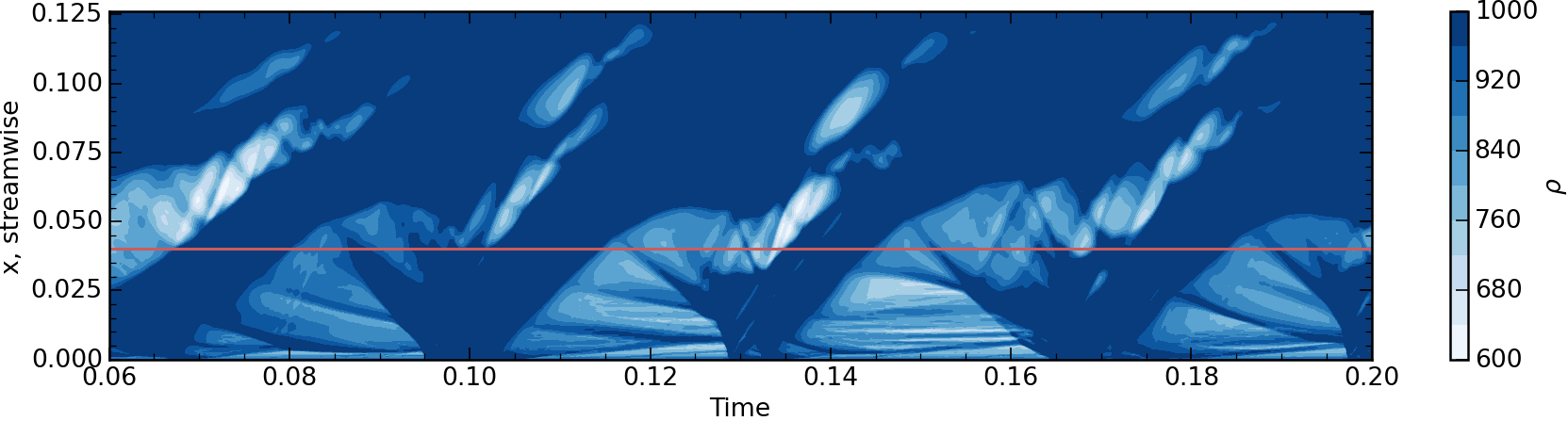
Beyond data consolidation, the suite of command-line tools automates common analysis tasks. Included scripts facilitate the plotting of time-averaged data along specified lines and the generation of contour plot animations depicting time evolution.
Key Benefits & Innovations:
- Accelerated Workflow: Reduces post-processing time from hours to minutes by harnessing HPC parallelism.
- Efficient Data Storage: Employs the Parquet file format, significantly minimizing the number of files and improving I/O performance.
- Scalability: Designed to handle large datasets typical of complex OpenFOAM simulations on HPC clusters.
- Automated Analysis: Provides ready-to-use scripts for common visualization and data extraction tasks, enhancing productivity.
This evolving codebase, available on GitHub, offers a robust and efficient alternative to traditional OpenFOAM post-processing methods, saving valuable time and computational resources.